INTERACTION
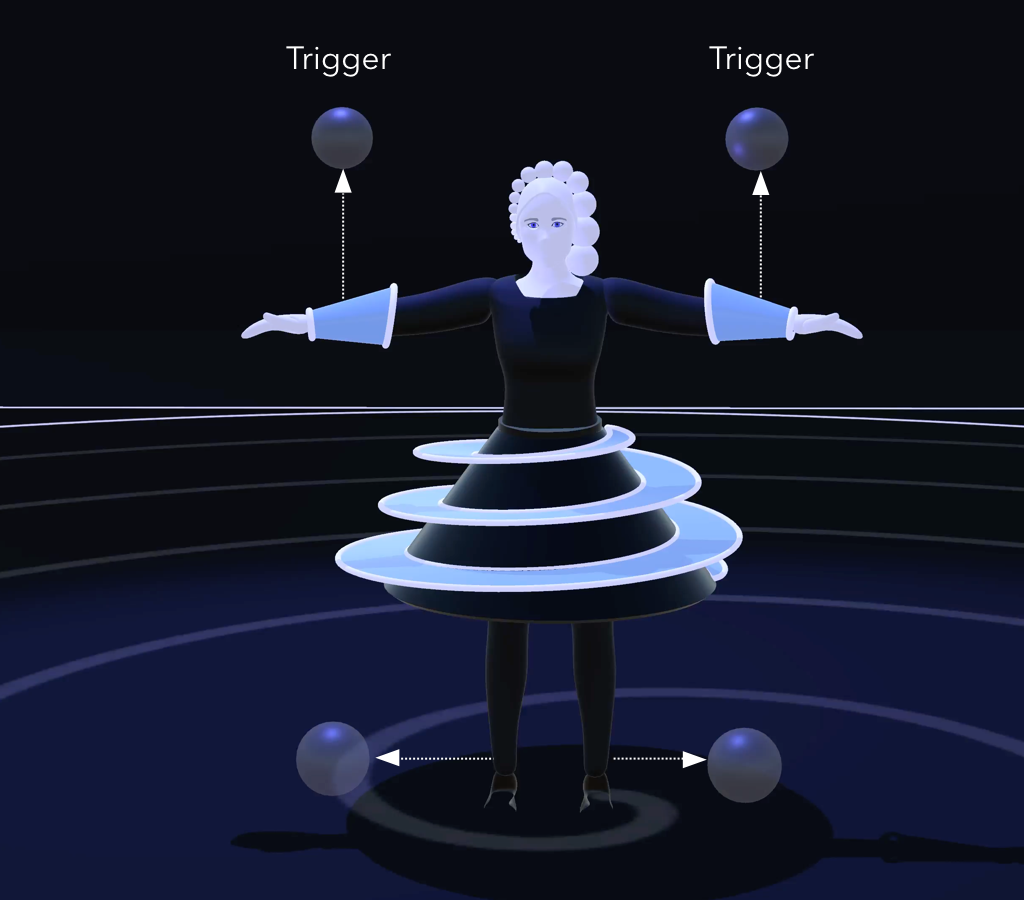
Make music, don't just listen to it
18 figures react in real time
Trigger sounds through movement
Make music, don't just listen to it
18 figures react in real time
Trigger sounds through movement
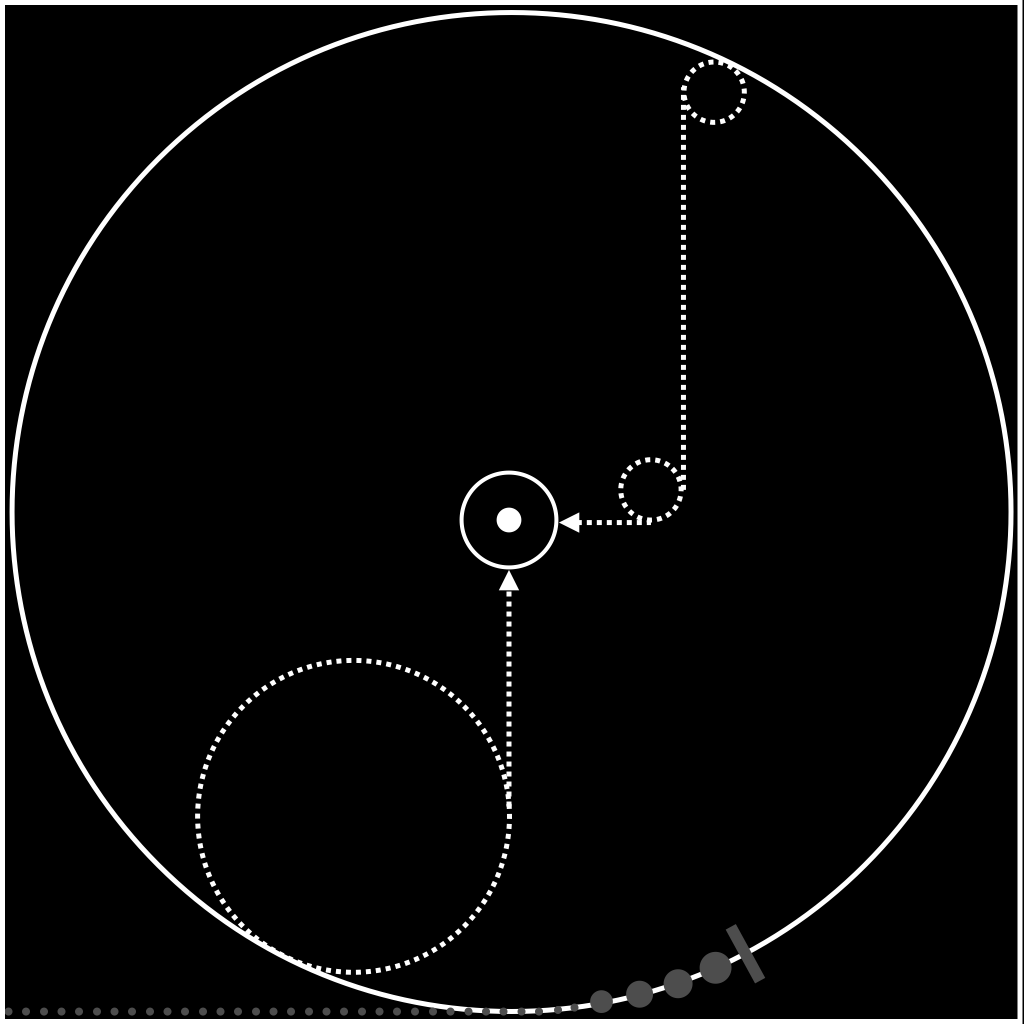
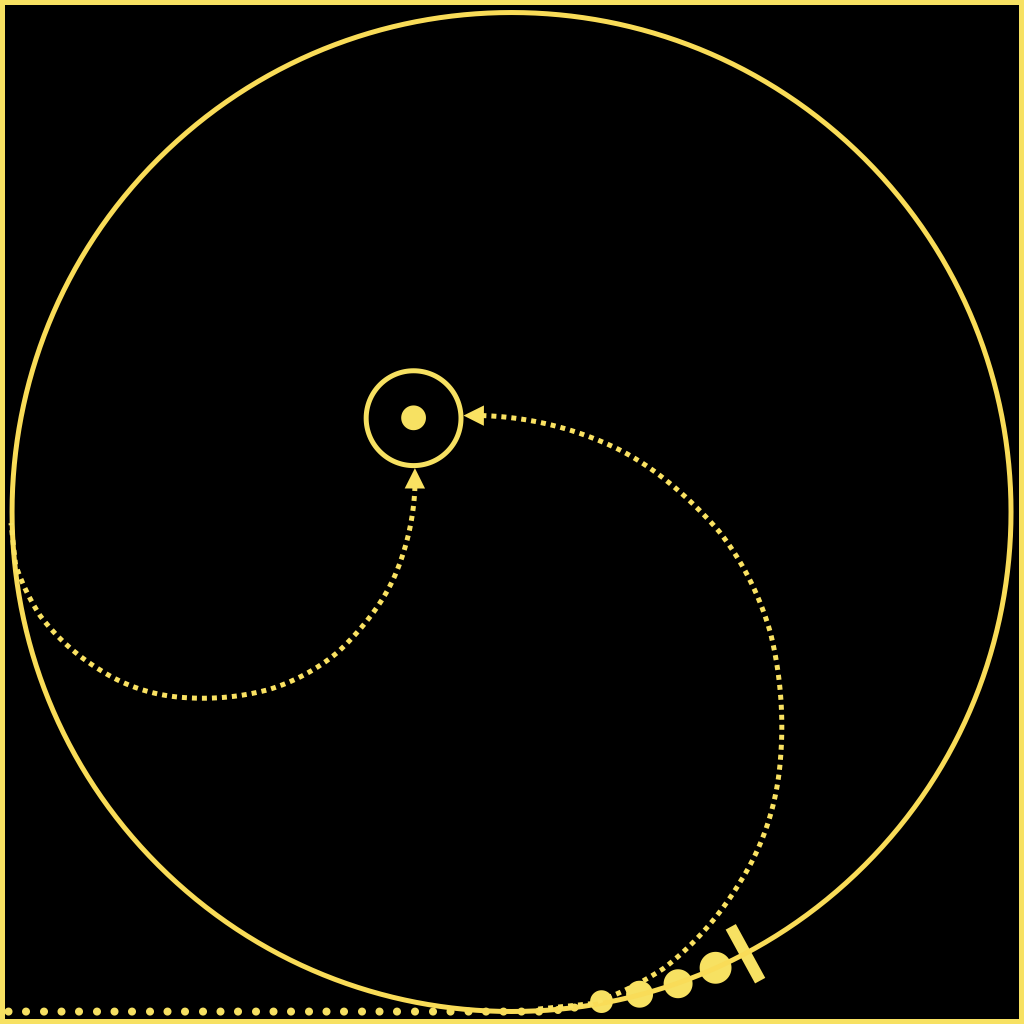
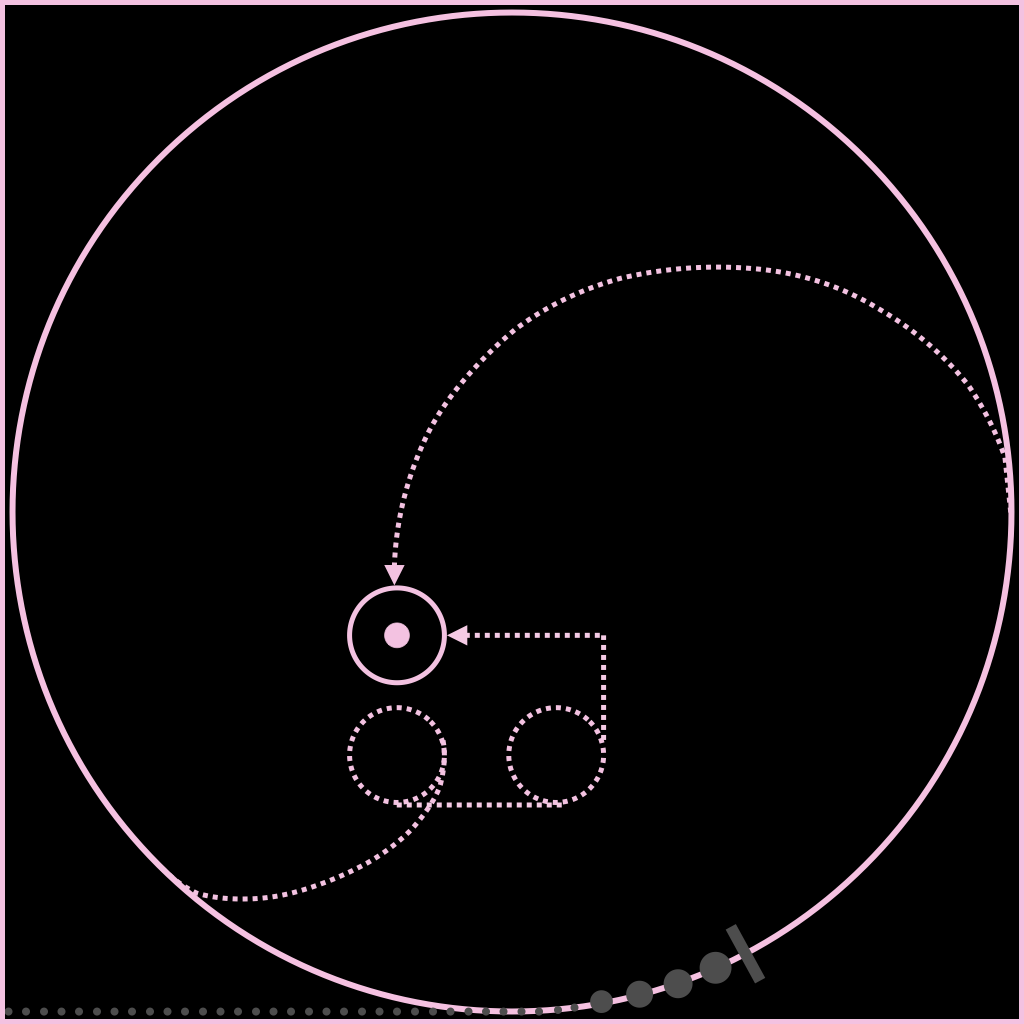
Create the choreography, don't just watch it
Move freely through the performance space
Explore costumes, music and history in 3D
For more than a decade, Oskar Schlemmer developed the idea of the Triadic Ballet before it was first performed in full in Stuttgart in 1922. He continued to develop it even afterward. A Master at the Bauhaus since 1920, he took over direction of the Bauhaus stage in 1923, where he shaped the experimental work exploring the connection between body, space, and movement. The Triadic Ballet became one of the key works to emerge from this.
Three dancers, three stage spaces, 18 figures: Schlemmer transformed the human body into moving sculptures through geometric costumes. Body, form, color, movement, and space were meant to come together in a new form of stage art.
More than 100 years later, Richard Witte transfers the Triadic Ballet into digital space.
The figures become digital figures – and the visitors themselves become their dancers. Using motion capture, their movements are transferred directly onto the figures.
Music plays a special role in this. Even Schlemmer sought a contemporary musical form that would correspond to his novel world of figure and movement. Richard Witte has taken up this idea and composed new music, consistently tied to the figures and their movements. During the performance, he plays live with elements of his composition, responding to what unfolds in the space.
In this way, the ballet is recreated anew with every encounter: from the visitor's movement, the digital figure, and the live-performed music.
An experiment that began more than 100 years ago is carried forward with the means of the present.
Museum Installation
The Missing Dimension of Every Schlemmer Collection
Museums around the world preserve Oskar Schlemmer's designs, costume studies, and photographs. Yet precisely the central element of the Triadic Ballet remains largely invisible to visitors: the experience of one's own body in space.
THE TRIADIC BALLET – DIGITAL closes this gap. The installation translates Schlemmer's vision for the first time into a permanently accessible, interactive educational medium and supplements existing collections with a dimension that neither display case nor wall text can provide: direct personal experience.
Why Museums Should Present This Installation
The work becomes comprehensible because it becomes experiential: Visitors no longer simply read about Schlemmer's ideas—they experience them. Through a standard webcam, movements are transferred in real-time to digital Schlemmer figures. The visitor becomes part of the spatial choreography that Schlemmer understood as the core of his work.
Educational value instead of technology showcase: The installation conveys central Bauhaus themes such as the relationship between human and geometry, body and space, and the interdisciplinarity between art, stage, and technology. This creates a customized educational offering for permanent exhibitions, special presentations, and digital educational concepts.
Developed for Museum Operations
No wearables, no supervision required: No controllers, no headsets, no sensor suits. The system operates entirely contactless. It requires no additional staff supervision and eliminates any hygiene concerns during continuous operation.
Vandalism-resistant and autonomous: The sensitive hardware (standard PC and projector) is completely protected and mounted out of visitor reach—on the ceiling or in housings. The webcam remains the only robust interface in the space.
High throughput without queues: While individual visitors actively interact, a fascinating visual performance simultaneously unfolds for the surrounding audience. This increases time spent in the space and actively prevents impatient queuing.
Curatorial benefit & Technical specifications: Supplements existing Schlemmer collections potential among approximately 120 museums.
Festival Installation
The Interactive Pop-up Installation for the Festival Crowd
Between two live acts, the strongest moments emerge at a festival. During these pauses, visitors don't simply want to wait—they want to discover, interact, and be entertained. RE-IMAGINING: SCHLEMMER transforms open spaces or lounge areas on festival grounds into a permanent, interactive live performance.
The Ultimate Traffic-Stopper
Visitors become performers: The crowd sees itself on a monumental projection surface—not as a simple video image, but transformed into a giant, futuristic Bauhaus figure. Each movement immediately generates a generative live-visual set. The effect is immediate, intuitive, and extremely captivating.
The festival's content hub: The visually spectacular, geometric bodies set against loud festival sound are the perfect generator for user-generated content (TikTok clips, Instagram Reels, festival photos). Visitors stage themselves and carry the festival's branding en masse into digital networks.
High throughput, collective show: The system solves the capacity problem of festival experiences: One person or small group performs actively on the floor—ten to one hundred people watch and celebrate the emerging choreography. The installation thus functions simultaneously as an active experience and as a passive show.
Requirements:
Standard PC, webcam, high-brightness projector, connection to the audio system.
Space: Flexible from 5×5 to 10×10 meters.
Logistics: Setup time: 1 min / Breakdown time: 1 min
By purchasing this application ("App"), the buyer receives a simple, non-exclusive, non-transferable license for private, non-commercial use only. The buyer is not permitted to:
All copyright, trademark and intellectual property rights remain with Richard Witte (Subsonic). Any use beyond this license requires prior written consent. Violations may result in civil and copyright law consequences.
§ 1 Subject Matter
Acquisition of a non-commercial license for "Bauhaus Ballett – Digital" for €10.00 incl. VAT.
§ 2 Delivery
After successful PayPal payment, the buyer receives access to download the App. No physical delivery.
§ 3 Payment
Payment exclusively via PayPal. Purchase price is due immediately.
§ 4 Usage Rights
Commercial use, public performance or further publication is excluded.
§ 5 Warranty
Statutory warranty rights apply. No guarantee for technical compatibility with specific devices or operating systems.
As this is digital content not delivered on a physical medium, the right of withdrawal expires once download begins — provided you have given your express consent below. Without this consent, a 14-day right of withdrawal applies from the date of contract conclusion.
Richard Witte · Freelance Artist · Mittenwalderstraße 48 · 10961 Berlin, Germany
Email: richard.witte@sub-sonic.de
Tax No.: 14 / 594 / 00140 · Finanzamt Friedrichshain-Kreuzberg
EU Dispute Resolution: ec.europa.eu/consumers/odr
Camera Usage
The App uses your device's webcam exclusively for local, real-time motion detection. No camera images, video sequences or biometric data are stored, transmitted or shared with third parties.
Payment Processing
Purchases are processed via PayPal. PayPal's privacy policy applies: paypal.com/privacy
Contact: richard.witte@sub-sonic.de